
Hello and welcome, sourcing professionals and apparel brands! If you’re reading this, you’re likely in the business of sourcing premium fleece fabric for your high-volume production lines. You understand that quality, consistency, and scalability are not just preferences—they are necessities for your business.
My name is Kylin, and I’ve been in the textile business for over 15 years, working directly with our factory to ensure our B2B clients get exactly what they need. Today, I want to pull back the curtain on one of the most critical and efficient processes in our industry: the Rotary Screen Printing Process.
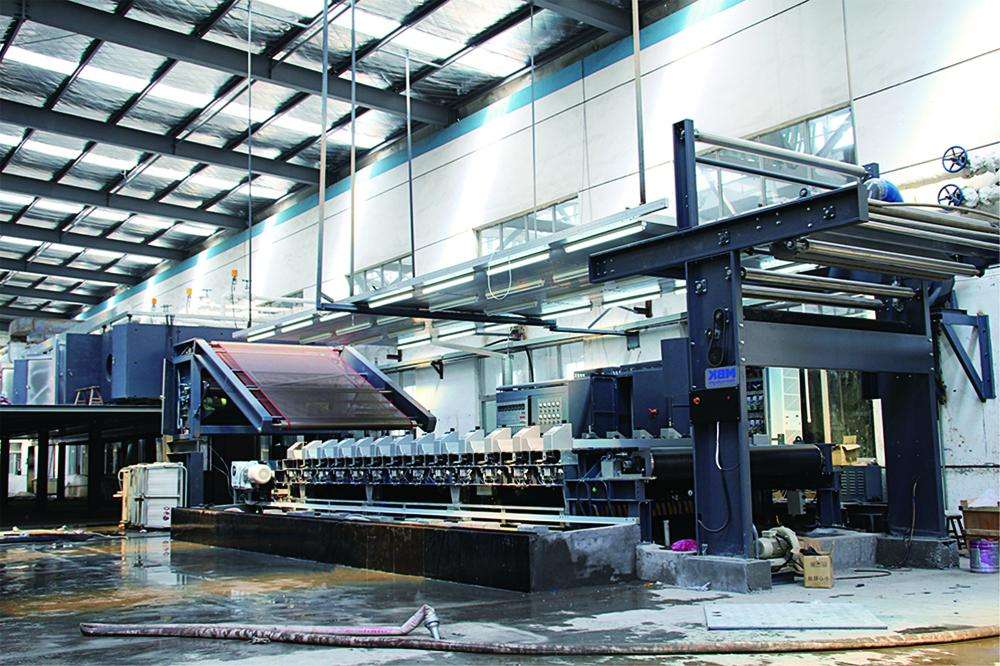
At our fully integrated factory, we specialize in manufacturing and exporting heavyweight polyester fleece fabric, and our state-of-the-art, German-engineered KBM rotary screen printing machines are the workhorses behind our stunning, consistent prints. If you’re placing orders of one container or more, understanding this process is key to making an informed decision.
So, grab a coffee, and let’s dive into the world of textile printing. By the end of this article, you’ll know exactly why our rotary screen printing process is the superior choice for your bulk fleece fabric orders and how you can get free samples to see the difference for yourself.
The Big Picture: A Brief Overview of Textile Printing Methods
Before we zero in on the star of the show, it’s crucial to understand the landscape. Fabric printing is the art of applying colorant to a substrate in specific patterns. For large-scale production, three primary methods dominate the scene, each with its own place.
1. Flatbed Screen Printing
- How it Works: Imagine a long printing table. The fabric is moved along this table, and at each color station, a flat, rectangular screen is lowered onto it. Ink is poured onto the screen and a squeegee is pulled across, forcing the color through the open mesh areas onto the fabric. The fabric then moves to the next station for the next color.
- Best For: Short runs, delicate fabrics, and designs that require extremely high clarity and color vibrancy. It’s excellent for lofty fabrics like thick fleece where contact needs to be precise.
2. Table (or Manual) Printing
- How it Works: This is the most traditional, labor-intensive method. The fabric is fixed onto a long table, and screens are manually placed, aligned, and printed by hand. It’s a slow process that relies heavily on skilled artisans.
- Best For: Very small batches, sampling, and highly intricate, high-fashion items where a “hand-made” touch is desired. For bulk orders, this method is not commercially viable due to its low speed and high cost.
3. Rotary Screen Printing (Our Specialty)
- How it Works: This is the modern, high-speed evolution of screen printing. Instead of flat screens, cylindrical, perforated nickel screens are used. Each screen corresponds to one color in the design. The fabric moves continuously under these rotating screens, and an squeegee inside each cylinder pushes the paste through the mesh onto the fabric. It’s a continuous, seamless process.
- Best For: High-volume production runs. This is the undisputed champion for printing large orders of apparel textiles, home textiles, and yes, our specialty—fleece fabric.
Now, let’s get into the real details of why we’ve invested so heavily in this technology.


Inside the Powerhouse: How the Rotary Screen Printing Process Works
Understanding the mechanics builds confidence in the quality you’ll receive. Our German-made KBM rotary screen printing machines are engineering marvels designed for precision and speed.
The Key Components of a Rotary Screen Printing Machine
- The Rotary Screens: These are the heart of the operation. Each screen is a hollow, seamless cylinder made of thin nickel foil with a micro-perforated pattern (the design) etched onto it. For every color in your design, a separate screen is created.
- The Color Box and Squeegee System: Inside each rotating screen sits a stationary color box with a flexible metal or rubber squeegee. As the paste is fed into the box, the squeegee forces it uniformly through the perforations in the screen onto the moving fabric beneath.
- The Endless Printing Blanket: The fabric is glued onto a continuous, heat-resistant rubber blanket that carries it smoothly and consistently under every screen. This ensures perfect registration (alignment) of all colors, even at high speeds.
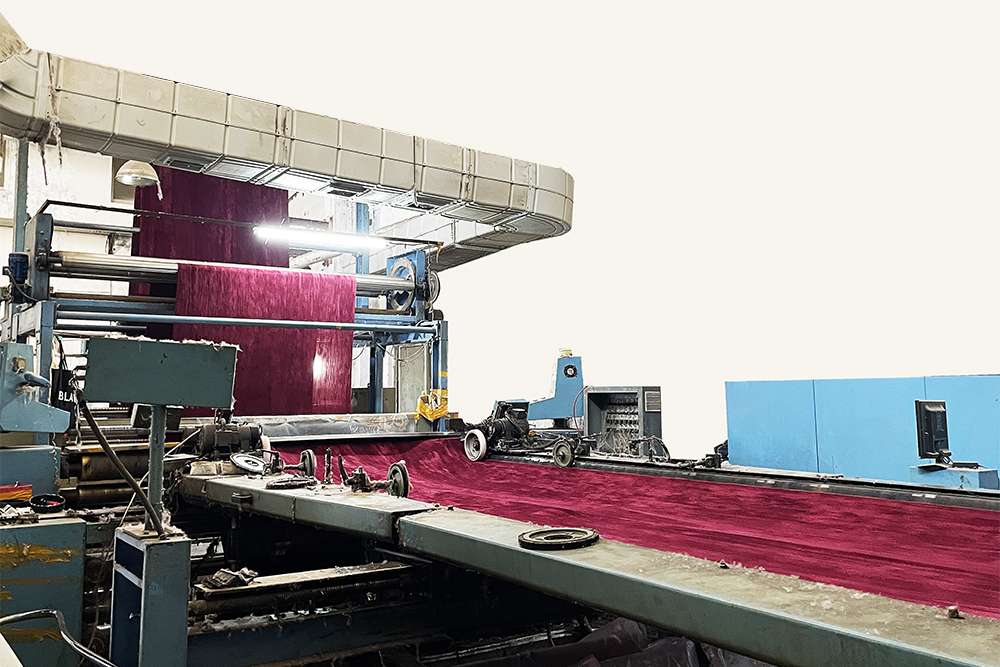
- The Drying and Fixation Unit: Immediately after printing, the fabric passes through a high-temperature dryer or steamer. This step is crucial for “fixing” the dyes, ensuring the print is colorfast and won’t fade after washing.
The Step-by-Step Workflow
- Screen Engraving: Based on your digital design file, each color separation is laser-etched onto a photoresist-coated screen, which is then developed to create the open areas for the paste.
- Machine Setup: The correct set of screens for your design is loaded onto the machine in the precise order.
- Paste Preparation: Our technicians meticulously prepare the printing paste—a specific formula for fleece fabric that ensures vibrant colors and a soft hand-feel.
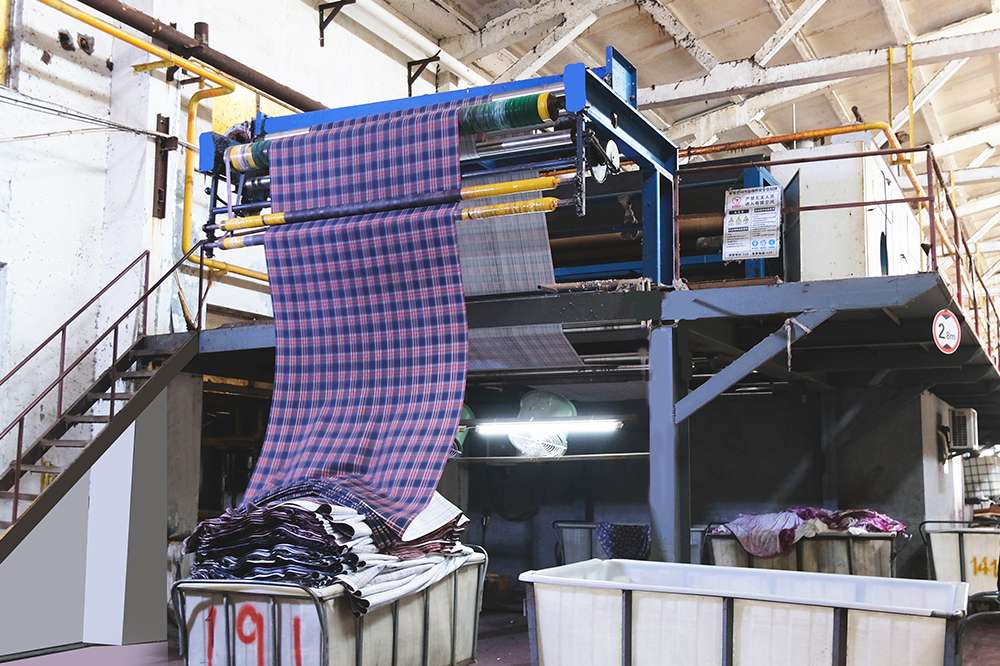
- Printing: The fabric is fed into the machine. It’s adhered to the blanket and moves at speeds of up to 100 meters per minute, passing under each rotating screen where colors are applied with pinpoint accuracy.
- Fixation & Washing: The printed fabric is steamed to set the dyes, then washed in our high-temperature machines to remove any excess paste, resulting in a clean, soft, and durable print.

Why We Champion Rotary Screen Printing for Fleece Fabric: The Unbeatable Advantages
So, why is this our go-to method for 95% of our bulk orders? Let’s break down the advantages that directly benefit you, the bulk buyer.
- Unmatched Production Speed and High Output: This is the number one reason. Compared to flatbed printing, rotary screen printing is significantly faster. It’s a continuous process, not a stop-start one. This high throughput means we can meet your tight deadlines and produce your 10,000-meter order efficiently.
- Perfect for Continuous, All-Over Patterns: The cylindrical screens allow for seamless patterns with no visible joints or repeats. This is ideal for the geometrics, stripes, and overall patterns often used in fleece fabric for loungewear and activewear.
- Excellent Color Penetration and Consistency: The pressure from the internal squeegee ensures the paste penetrates deeply into the fibrous pile of the fleece fabric. This results in rich, vibrant colors on the surface and excellent coverage that won’t “grin through” or look faded after wear and washing.
- Operational Efficiency and Lower Labor Costs: The process is highly automated. Once set up, it requires minimal manual intervention. This reduced labor intensity translates to cost savings that we can pass on to you for your large orders.
- Versatility Across a Broad Spectrum of Designs: While it excels with repeats, modern machines like our KBM models can handle a wide range of designs with impressive detail. We can print up to 16 colors simultaneously, allowing for complex and photorealistic patterns.
Printing Methods Side-by-Side: A Quick Comparison Table
| Feature | Rotary Screen Printing | Flatbed Screen Printing | Table Printing |
|---|---|---|---|
| Speed | Very High (50-100 m/min) | Low to Medium | Very Low |
| Output Volume | Excellent for Bulk Orders | Good for Short Runs | Poor, for Sampling Only |
| Cost-Effectiveness (Bulk) | Excellent | Fair | Poor |
| Design Repeat Size | Continuous, limited by circumference | Large, limited by screen size | Large, limited by screen size |
| Color Registration | Excellent | Very Good | Good (Skill Dependent) |
| Fabric Versatility | High | High | High |
| Setup Cost & Time | Higher initial setup, faster running | Lower initial setup, slower running | Low setup, very slow running |
As you can see, for your 1000kg per color minimum order, rotary screen printing is, without a doubt, the most commercially and qualitatively sensible choice.

From Fiber to Finished Fabric: Our Integrated Manufacturing Flow
Trust is built on transparency. As a industry-trade integrated entity, we control every step of the process. Here’s how your fleece fabric comes to life:
- Weaving: We start with high-tenacity polyester yarns, knitting them on advanced circular knitting machines to create a soft, lofty, and stretchable fleece base cloth.
- Dyeing: For solid-colored grounds, our jet dyeing machines ensure uniform, penetrating color with excellent fastness properties.
- Printing: This is where the magic happens, using our advanced rotary screen printing process as detailed above.
- Finishing: We apply specialized softeners and anti-pilling treatments to enhance the hand-feel and durability of the fabric, ensuring it remains soft and looks new wash after wash.
- High-Temperature Wash & Dry: A critical step for fleece fabric. This process preshrinks the material, removes any residual chemicals, and fluffs up the pile for maximum softness and volume stability.
- Quality Control: Every single meter of fabric passes under the watchful eyes of our QC team and through our automated inspection machines. We check for printing defects, color consistency, and any weaving imperfections.
Your Design, Our Craft: A Seamless Customization Journey
We believe your products should be as unique as your brand. That’s why we offer unparalleled customization options.
- Path 1: Choose from Our Vast Library Stuck for inspiration? Our physical and digital pattern library boasts over 6,000 proven designs. If you find a pattern you love, we can put it into production immediately—no development time or fees.
- Path 2: Create a Custom Design Have a unique vision? We are here to bring it to life.
- MOQ: 1000kg per fabric type, per colorway.
- Engraving Fee: A one-time fee is required to create the custom screens for your design. The great news? If your order volume reaches a negotiated threshold, we happily waive this fee entirely.
- Your IP is Protected: We treat your designs with the utmost confidentiality. We sign NDAs and have a strict policy: we will not show your custom design to any other client or market it ourselves until one month after you have received your goods and begun sales. Your competitive edge is safe with us.
How to Specify Your Custom Colors
Getting the color right is paramount. You have three easy options:
- Use Our Standard Color Card: We provide comprehensive physical color cards for our fleece fabric.
- Specify a Pantone® Code: For solid colors, simply provide us with the Pantone® Textile Cotton (TCX) or Polyester (TPG) number, and we will match it.
- Send Us a Physical Sample: For the most accurate match, send us a swatch of your desired color. Our lab will use spectrophotometers to create a perfect dye formula.
See the Quality, Feel the Difference: Let’s Start Your Project
Reading about a process is one thing; feeling the premium quality of a fabric printed on a German KBM machine is another. We are so confident in our product that we invite you to put us to the test.
Request your free, no-obligation sample pack today. Feel the weight, check the color vibrancy, and test the print durability for yourself. This is the first step toward a reliable, high-volume partnership.
Come Meet Us In Person!
Nothing beats a face-to-face conversation. We will be showcasing our latest fleece fabric collections and live printing capabilities at two major upcoming fairs:
- Heimtextil Uzbekistan 2025
- Dates: October 14-16, 2025
- Our Booth: Hall 2, Stand H023 & H024
- Focus: Connecting with our partners in Central Asia.
- 138th Canton Fair (China Import and Export Fair)
- Dates: October 31 – November 4, 2025
- Our Home Textile Booth: Hall 14.2, Stand G102
- Our Fabric Booth: Hall 14.4, Stand G17
- Focus: Meeting our global clients and displaying the full breadth of our capabilities.
Visit us at either event to see our fabrics in person and discuss your specific needs with our technical and sales team.

Frequently Asked Questions (FAQ)
Q1: What is the typical lead time for a 20,000kg custom print order?
A: From final design and color approval, production typically takes 25-30 days. This includes screen engraving, bulk production, and thorough QC. We always provide a precise timeline upon order confirmation.
Q2: How many colors can you print in one design with your rotary screen printing machines?
A: Our primary KBM machines can handle up to 16 colors simultaneously, allowing for incredibly complex and detailed designs.
Q3: Is the print on fleece fabric durable? Will it crack or fade?
A: Absolutely. Our combination of high-quality dyes, precise paste formulation, and proper high-temperature fixation and washing ensures that our prints are highly resistant to cracking, fading, and pilling, even after multiple industrial washes.
Q4: What file format do you prefer for custom designs?
A: We prefer vector-based files (like .AI or .EPS) for the cleanest results. High-resolution raster files (like .PSD or .TIFF at 300 DPI) are also acceptable. Our pre-press team will guide you through the specifics.
Q5: Do you offer any certifications for your fabrics?
A: Yes, we can provide OEKO-TEX Standard 100 certified fabrics upon request. This ensures that they have been tested for harmful substances and that all our products meet import standards in Europe and the United States.




Great article! The explanation of the rotary screen printing process for fleece fabric is detailed, professional, and very easy to understand. I especially liked how you covered machine setup, color consistency, production speed, and fabric quality advantages. This is truly valuable information for textile manufacturers, sourcing teams, and printing professionals. Keep sharing such high-quality textile industry knowledge!
Thank you very much for your review—it gives us even more confidence!